

Car insurance rates are not based on driving history alone. Insurance companies also look at your credit-based insurance score when calculating risk. Many drivers are surprised to learn that credit can affect how much they pay for coverage.
Understanding how credit impacts car insurance rates can help you make smarter financial decisions and potentially lower your premium over time.
The Role of Credit Scores in Car Insurance Rates
Car insurance rates are influenced by many factors, including your driving record, age, location, and type of vehicle. But one factor surprises many people: your credit score. Insurance companies in many states use credit information to help determine auto insurance rates because studies show a connection between credit habits and insurance claims.
If you understand how credit affects car insurance rates, you can take steps to improve your score and save money on your policy.
How Credit Scores Affect Car Insurance Rates
Insurance companies use a special version of your credit report called a credit-based insurance score. This score is different from the score lenders use for loans or credit cards.
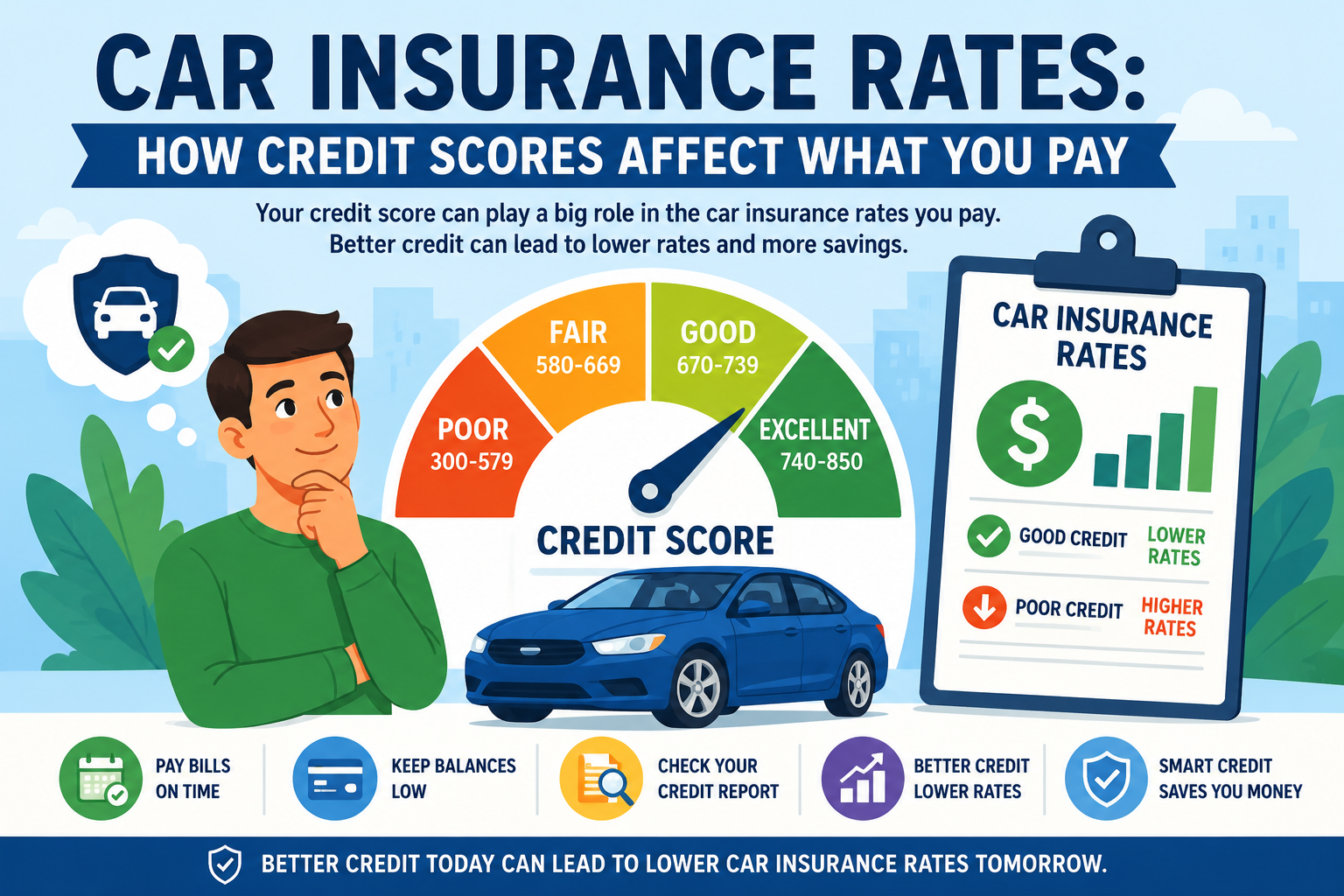
Companies believe drivers with better credit are less likely to file claims. Because of this, people with higher scores often receive lower car insurance rates. Drivers with poor credit may pay much higher premiums, even if they have a clean driving record.
Your payment history, debt levels, credit history length, and new credit accounts can all influence auto insurance rates.
Why Insurance Companies Use Credit Scores for Auto Insurance Rates
Insurance companies rely on statistics and risk analysis. Research shows that drivers with lower credit scores tend to file more claims. As a result, insurers use credit information to predict future risk.
This system allows companies to set auto insurance rates based on the likelihood of claims. While some people disagree with this practice, insurers argue that it helps them price policies more accurately.
Not every state allows the use of credit scores for car insurance rates. Some states have restrictions or bans on this practice.
Poor Credit Can Lead to Higher Auto Insurance Rates
Drivers with poor credit may pay hundreds or even thousands more per year for coverage. This can happen even if they have never caused an accident.
Higher car insurance rates can create financial stress, especially for young drivers or families on a tight budget. That is why improving your credit can have benefits beyond loans and mortgages.
Making on-time payments and reducing debt may help lower auto insurance rates over time.
Ways to Improve Credit and Lower Your Rates
Improving your credit score takes time, but small changes can make a big difference.
Here are a few ways to improve your credit and potentially reduce auto insurance rates:
- Pay bills on time every month
- Keep credit card balances low
- Avoid opening too many new accounts
- Check your credit report for errors
- Build a long history of responsible credit use
As your credit improves, you may qualify for better auto insurance rates and more discounts.
Other Factors That Influence Auto Insurance Rates
Credit scores are important, but they are only one part of the equation. Insurance companies also look at:
- Driving history
- Accident record
- Vehicle type
- Mileage
- Age and experience
- ZIP code
Even with excellent credit, traffic tickets and accidents can still raise auto insurance rates. Safe driving and responsible financial habits work best together.
How to Shop for Better Auto Insurance Rates
Every insurance company uses its own formula. One company may weigh credit heavily, while another may focus more on driving history.
That is why it is important to compare quotes from multiple providers. Shopping around can help you find the best auto insurance rates for your situation.
Ask about discounts, bundling options, and programs for safe drivers. Some companies may offer better car insurance rates even if your credit is not perfect.
The Bottom Line
Credit scores play a major role in determining car insurance rates in many states. Drivers with strong credit often pay less because insurance companies see them as lower risk.
Improving your financial habits can lead to lower car insurance rates over time. By managing your credit responsibly and comparing quotes regularly, you can find affordable coverage that protects both your car and your budget.
Call Path Financial and Insurance Agency and ask us how! You may also visit these links to get your quote: